Cracking the Cognitive Code of the Developing Brain in Early Life
Details
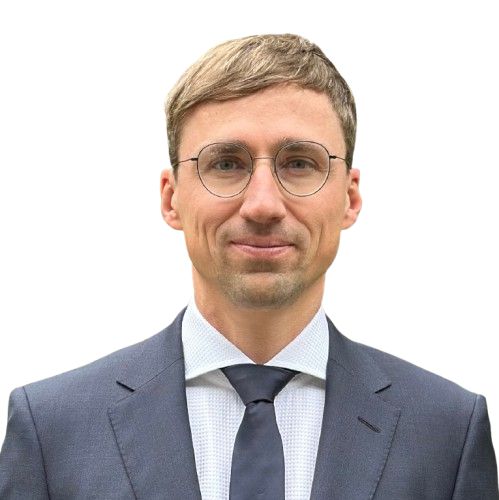
| Presenter: | Prof. Dr. Michael Skeide |
| Title: | Cracking the Cognitive Code of the Developing Brain in Early Life |
| Affiliation: | Institute for Child and Adolescent Psychiatry University Hospital Schleswig-Holstein, Kiel |
| Date: | 10.09.2026 |
| Time: | 17:00 h |
| Place: | InnoPier, Martensdamm 6, 24103 Kiel (9th floor) |
This colloquium talk will take place as part of the Biomagnetic Sensing International Summer School 2026. All members of the CRC and anyone interested are warmly invited to attend the talk. Following the presentation, attendees will have the opportunity to meet the Summer School participants over light refreshments.
Contents of the Talk
Children are the most data-efficient learning systems in the known universe. Insights into human cognitive development could thus advance technology by laying the foundation for more data-efficient learning algorithms. In this talk, I will demonstrate how neuroscience overcomes the limitation that behavior reveals little about cognition in early life by rendering it possible to read the physiological codes of cognition that are generated by the developing brain. Moreover, I will argue that understanding cognitive development is crucial to solving one of the greatest global health challenges: building mental health resilience in future generations.
Short CV
Michael completed his studies at Heidelberg University and Harvard University before obtaining a PhD and a Habilitation in Psychology from Leipzig University and Humboldt University. He has been a postdoctoral fellow at Stanford University and headed a research group at the Max Planck Institute for Human Cognitive and Brain Sciences. In September 2025 he was appointed Full Professor at the Institute for Child and Adolescent Psychiatry at CAU and UKSH Kiel. His lab uses functional MRI, EEG, and MEG to investigate how the developing brain gives rise to fundamental cognitive abilities in early life, including perception, attention, learning, memory and language. Moreover, his lab explores psychophysiological markers for early detection of neurodevelopmental disorders, such as autism and ADHD. His award-winning research is published in Nature and Science journals and supported by the European Research Council, the German Research Foundation, the Alexander von Humboldt Foundation, the National Institutes of Health, and the Jacobs Foundation.